

FROM THE FIELD
Why Asphalt Paving Isn’t a Daily Affair
Understanding the challenges behind paving delays.
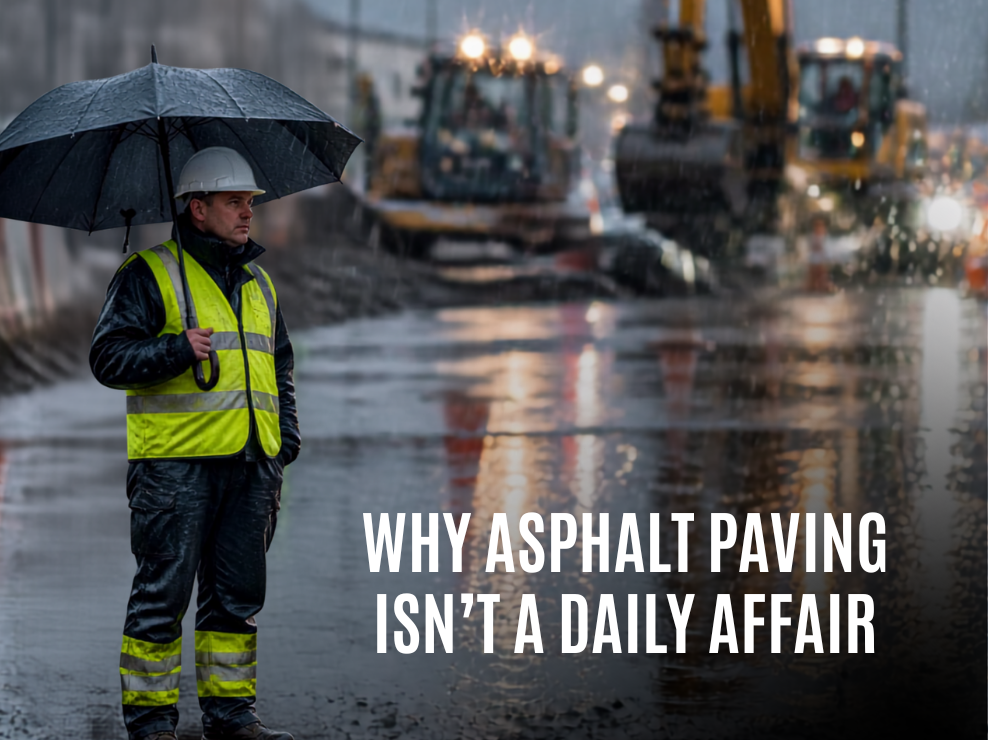
Have you ever found yourself driving past a construction site, surrounded by bright orange barrels, and wondered why asphalt paving seems to take so long? You’re definitely not alone. Many people express frustration, especially during periods when no workers are present. Understanding the complexities behind the paving process reveals that it isn’t as straightforward as it may seem.
Weather: The Unpredictable Factor
One of the primary reasons asphalt pavers can’t work every day is our ever-changing weather. Asphalt paving is particularly sensitive to weather conditions. As Richie Keifer, Paving Operations Manager for Gerken Paving, Inc., notes, “Weather plays a critical role in determining when paving can occur.”
Rain can be a significant setback; it not only ruins hot-mix asphalt but also washes away the loose base materials essential for a solid pavement foundation. Likewise, colder temperatures pose a challenge because asphalt heat dissipates quickly, making it tough to compact the material properly. Achieving proper compaction is vital to ensuring long-lasting, durable roads.
To navigate weather-related challenges effectively, Richie stays on top of forecasts throughout the day. His planning starts as early as 5:30 AM, relying on local news and weather apps, such as DTN WeatherSentry®, to make informed decisions about paving schedules. That proactive approach enables better planning and adjustments as needed, enhancing efficiency wherever possible.
Beyond Weather: Other Factors Affecting Paving
While weather plays a significant role, it’s not the only factor at play. Asphalt production processes and operational logistics also come into play. For instance, if the plant is handling multiple production jobs, outside customer orders often take priority, which can delay local paving projects.
Moreover, various logistical hurdles can arise, such as the availability of qualified testing personnel and the ability to meet staffing requirements. As Richie reflects, “My priority is ensuring our team has a place to work.” When delays do happen, he works tirelessly to get the crews back on track as swiftly as possible.
The Bigger Picture
The complexities of road paving go well beyond the visible work done on-site. It requires meticulous planning, attention to environmental conditions, and management of various logistical hurdles.
So, next time you encounter those familiar construction signs, remember the hard work and careful planning that goes into paving. It’s not just about putting down asphalt; it’s about creating safe, durable roads for everyone to use. Understanding this can help us all appreciate the challenges of road construction and the efforts required to deliver quality work despite the obstacles.